Gaggia Brera Manual: Comprehensive Troubleshooting & Guide
Navigating your Gaggia Brera’s operation requires a detailed manual; this guide offers troubleshooting for electricity, water, brew unit, and ground coffee issues.
The Gaggia Brera is a fully automatic espresso machine designed for home use, celebrated for its compact size and user-friendly operation. It delivers authentic Italian espresso with minimal fuss, making it a popular choice for coffee enthusiasts. This machine boasts a ceramic grinder, ensuring consistent coffee grounds and a quiet brewing process. Understanding its features and potential issues is key to enjoying years of flavorful coffee.
This guide serves as a comprehensive resource for Gaggia Brera owners, offering detailed troubleshooting steps and maintenance advice. Whether you’re facing problems with power, water flow, the brew unit, or coffee quality, we’ll provide clear instructions to help you resolve them. Regular maintenance, including descaling and cleaning, is crucial for optimal performance and longevity. We will also point you towards valuable resources like the full service manual and parts diagrams.
Understanding the Gaggia Brera Features
The Gaggia Brera distinguishes itself with several key features enhancing the coffee experience. Its integrated ceramic grinder offers adjustable grind settings, allowing customization for different coffee bean types and preferred espresso strength. The machine features a pre-infusion system, wetting the grounds before full pressure is applied, resulting in a richer, more flavorful extraction.
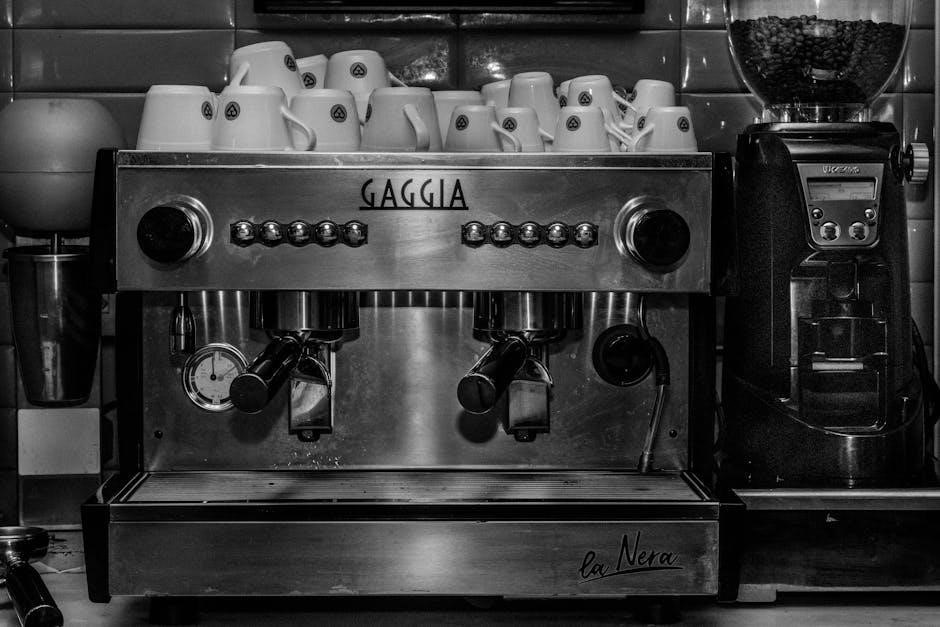
A user-friendly control panel with illuminated buttons simplifies operation, while the adjustable cappuccino frother delivers perfectly textured milk foam for lattes and cappuccinos. The Brera also includes an automatic rinsing cycle for easy cleaning and maintenance. Understanding these features – from warming cups with hot water to interpreting display alerts – is vital for maximizing the machine’s potential and addressing potential troubleshooting needs effectively.
Common Gaggia Brera Problems & Solutions
Addressing frequent issues like leaks, power failures, or brewing problems is crucial; this section provides solutions for electricity, water, and brew unit troubleshooting.
Electricity Related Issues
Encountering electrical problems with your Gaggia Brera can disrupt your coffee routine. Common issues include the machine failing to power on, or not heating properly. Before diving into solutions, always ensure the machine is unplugged for safety. If the machine doesn’t power on, verify the power cord is securely connected to both the machine and a functioning outlet.

Check your home’s circuit breaker or fuse box to rule out a tripped breaker or blown fuse. If the machine powers on but doesn’t heat, the heating element might be faulty, requiring professional repair. A lack of power can also stem from internal wiring issues, best addressed by a qualified technician. Remember to consult the full service manual for detailed electrical diagrams and safety precautions before attempting any self-diagnosis.
Powering On Problems
If your Gaggia Brera refuses to power on, begin with the simplest checks. Confirm the power cord is firmly plugged into both the machine and a working electrical outlet. Test the outlet with another device to ensure it’s supplying power. Inspect the power cord itself for any visible damage, such as cuts or fraying; a damaged cord needs immediate replacement.
Next, verify the main power switch, if present, is in the ‘on’ position. Sometimes, a tripped circuit breaker or blown fuse in your home’s electrical system can be the culprit. Reset the breaker or replace the fuse if necessary. If these steps don’t resolve the issue, there might be an internal electrical fault within the machine, necessitating professional service and diagnosis. Always prioritize safety and disconnect the machine before inspecting any electrical components.
Machine Not Heating
When your Gaggia Brera powers on but fails to heat up, several factors could be at play. First, ensure sufficient time has passed after powering on, as the machine requires a warm-up period. Check if the display indicates any error messages related to heating. A common issue is a lack of water in the reservoir; the machine won’t heat without water;
If water is present, the heating element itself might be faulty. Descaling the machine regularly can prevent mineral buildup that hinders heating efficiency. A clogged or malfunctioning thermoblock is another potential cause. If you suspect a thermoblock issue or a faulty heating element, professional repair is recommended. Never attempt to disassemble or repair internal heating components yourself due to the risk of electrical shock.
Water Related Issues
Addressing water-related problems is crucial for optimal Gaggia Brera performance. Common issues include a complete lack of water dispensing, frustrating leaks, and consistently low water pressure. A primary step is verifying the water reservoir is filled and correctly inserted. Inspect the water filter; a clogged filter restricts water flow. Descaling the machine regularly prevents mineral buildup within the internal water pathways, a frequent cause of these problems.
Leaks can originate from the drip tray, indicating internal drips, or from underneath the machine, suggesting a more significant issue with seals or connections. Low water pressure often stems from air trapped in the system or a partially blocked water line. Consistent troubleshooting and preventative maintenance are key to resolving these water-related concerns.
No Water Dispensing
Encountering no water dispensing from your Gaggia Brera is a common frustration. First, confirm the water reservoir is adequately filled and properly seated. Check if the machine has recently undergone descaling; incomplete cycles can sometimes interrupt water flow. A clogged water filter is a frequent culprit, restricting water passage. Inspect the water intake hose for any kinks or obstructions that might be blocking the water supply.
Furthermore, air trapped within the pump can prevent water from being drawn through. Try performing a manual prime by running several dispensing cycles without coffee. If the issue persists, the pump itself may be failing and require professional attention. Regular descaling and filter replacement are vital preventative measures.
Water Leaks – Identifying the Source
Addressing water leaks in your Gaggia Brera requires pinpointing the origin. A rapidly filling drip tray, even without brewing, suggests a leak within the machine. Inspect the connections of the water reservoir, hoses, and brew group for any visible drips. Water pooling underneath the machine often indicates a more serious internal leak, potentially from the pump or boiler.
Carefully examine the drip tray itself for cracks. Leaks from the dispensing head can signify a clogged or damaged dispensing unit. Regularly cleaning the brew unit and dispensing head helps prevent blockages. If you’re unable to locate the source, or the leak is substantial, discontinue use and consult a qualified technician to avoid further damage.
Leak from Drip Tray
A frequently filling drip tray on your Gaggia Brera, even when not actively brewing, is a common symptom indicating a minor leak within the machine’s internal pathways. This often isn’t a critical failure, but requires investigation. Check the brew unit for proper seating and sealing; a loose or improperly installed brew unit can contribute to dripping; Inspect the dispensing head for any cracks or blockages, as these can cause overflow into the drip tray.
Regular cleaning of the brew unit and dispensing head is crucial for preventing such leaks. Ensure the drip tray is correctly positioned and not damaged. If the issue persists after these checks, a deeper internal inspection might be necessary to identify a faulty seal or connection.

Leak Underneath the Machine
Discovering water pooling beneath your Gaggia Brera is a more concerning issue than a simple drip tray overflow, potentially signaling a significant internal leak. This often points to problems with the machine’s internal water lines, pump, or connections. Immediately disconnect the machine from power to prevent electrical hazards.
Carefully inspect the area around the water tank, pump, and tubing for visible leaks. Check the connections between the water tank and the machine, as well as the pump’s inlet and outlet hoses. A cracked or loose hose is a common culprit. If you can’t pinpoint the source, internal component inspection is needed, potentially requiring professional service. Ignoring this leak can lead to further damage and electrical risks.
Low Water Pressure
Experiencing noticeably low water pressure during brewing or steam wand operation with your Gaggia Brera indicates a restriction within the water circuit. Several factors can contribute to this issue, starting with a potentially clogged water filter – ensure it’s clean or replaced according to the manufacturer’s recommendations. Scale buildup within the machine’s internal waterways is another frequent cause, necessitating descaling.
Inspect the water intake hose for kinks or obstructions. A partially blocked pump inlet can also restrict water flow. If descaling and hose inspection don’t resolve the problem, the pump itself might be failing and require replacement. Consistent low pressure impacts brew quality and steam performance, so addressing it promptly is crucial for optimal operation.
Brew Unit Issues
The Gaggia Brera’s brew unit is central to the coffee-making process, and malfunctions here can manifest in various ways. Common problems include the brew unit failing to engage, becoming stuck during operation, or producing inconsistent results. Regular cleaning and lubrication are vital preventative measures; coffee oils and grounds accumulate, hindering smooth movement.
If the brew unit isn’t engaging, check for obstructions or ensure it’s properly locked into place. A stuck brew unit often requires manual intervention – carefully attempt to cycle it, but avoid forcing it. Consistent maintenance, including periodic disassembly and cleaning as detailed in the service manual, extends the brew unit’s lifespan and ensures optimal espresso extraction.
Brew Unit Not Engaging
When the Gaggia Brera brew unit fails to engage, several factors could be at play. First, verify the machine has sufficient power and isn’t displaying any error messages. A common cause is an obstruction within the brew circuit – coffee grounds or debris can physically prevent movement. Carefully inspect the brew unit for visible blockages and gently remove any obstructions.
Ensure the brew unit is correctly locked into its position within the machine; an improperly seated unit won’t initiate the brewing cycle. If the unit appears clear and correctly positioned, the issue might stem from a faulty solenoid or motor. Consulting the service manual for diagnostic procedures and potential component replacement is recommended in these cases.
Brew Unit Stuck
A stuck brew unit on your Gaggia Brera often indicates a mechanical obstruction or a lubrication issue. Do not force the unit, as this could cause further damage. Begin by powering off the machine and allowing it to cool completely. Carefully inspect the brew unit for any visible obstructions, such as coffee grounds or scale buildup, hindering its movement.
Attempting gentle manual movement, while powered off, can help identify the point of resistance. If the unit remains stuck, consult the service manual for disassembly instructions to access and clean internal components. Proper lubrication of the brew unit’s moving parts is crucial; use a food-safe silicone grease specifically designed for espresso machines. If problems persist, professional repair may be necessary.
Brew Unit Cleaning & Maintenance
Regular cleaning of the Gaggia Brera’s brew unit is paramount for optimal performance and longevity. The brew unit should be removed and cleaned weekly, or more frequently with heavy use. Begin by powering off and unplugging the machine. Carefully remove the brew unit following the instructions in your manual.
Disassemble the unit, paying attention to the piston, seals, and brewing screen. Rinse all components thoroughly under warm water, removing any coffee residue or buildup. Use a soft brush to clean hard-to-reach areas. Lubricate the piston seals with a food-safe silicone grease before reassembly. Proper maintenance prevents blockages and ensures consistent coffee extraction, extending the life of your machine.
Ground Coffee Issues
Addressing ground coffee related problems with your Gaggia Brera ensures a satisfying brewing experience. A common issue is coffee not dispensing, often caused by a blockage in the brew unit or a too-fine grind setting. Conversely, weak coffee brew can stem from insufficient coffee grounds, a coarse grind, or a low brewing temperature.
Another frustrating problem is finding coffee grounds in your cup. This typically indicates a damaged brew unit seal or improper assembly after cleaning. Regularly inspect and replace seals as needed. Ensure the correct grind size is used – too fine a grind can pass through the filter. Consistent maintenance and proper grind adjustment are key to resolving these ground coffee issues.
Coffee Not Dispensing
Encountering a situation where your Gaggia Brera isn’t dispensing coffee can be frustrating, but several potential causes exist. First, check for blockages within the brew unit; grounds can accumulate and obstruct water flow. A too-fine grind setting is another frequent culprit, creating a dense puck that resists water passage. Ensure the water reservoir is adequately filled and properly seated.
Furthermore, verify the dispensing head isn’t clogged – cleaning it regularly prevents buildup. A video demonstrates potential solutions for this issue, suggesting a thorough inspection of the internal components. If the problem persists, consider a descaling cycle to remove mineral deposits that might be hindering water flow. Proper maintenance and attention to grind size are crucial for consistent coffee delivery.
Weak Coffee Brew
Experiencing a weak coffee brew from your Gaggia Brera often points to insufficient coffee grounds being used. Increasing the amount of coffee in the portafilter is the simplest initial adjustment. However, a coarse grind setting can also contribute, as water passes through too quickly, under-extracting the coffee’s flavors. Experiment with finer grind settings to increase extraction time.
Additionally, ensure you’re using fresh, high-quality coffee beans, as stale beans yield a weaker brew. Check the water temperature; if the machine isn’t heating sufficiently, it won’t extract the coffee properly. Regular descaling is vital, as mineral buildup can affect heating performance. Finally, confirm the brew unit is functioning correctly and delivering adequate pressure for optimal extraction.
Coffee Grounds in Coffee
Finding coffee grounds in your cup suggests a problem with the grinding or brewing process within your Gaggia Brera. A common cause is a grind that is too fine; excessively fine grounds can slip past the brew unit’s filter. Adjusting to a slightly coarser grind setting can resolve this. Inspect the brew unit for any cracks or damage to the filter or seals, as these can allow grounds to escape.
Ensure the brew unit is properly assembled and locked into place. A loose or incorrectly fitted brew unit won’t create a tight enough seal. Regularly cleaning the brew unit is crucial, as accumulated coffee residue can contribute to grounds ending up in your coffee. Finally, verify the quality of your coffee beans; overly oily beans can sometimes produce more fines.
Gaggia Brera Maintenance & Cleaning
Regular upkeep, including descaling, brew unit cleaning, and steam wand care, ensures optimal performance and longevity for your Gaggia Brera coffee machine.
Descaling the Gaggia Brera
Descaling is crucial for maintaining your Gaggia Brera, preventing mineral buildup that hinders performance and potentially damages internal components. The frequency depends on water hardness; generally, every 2-3 months is recommended. Utilize a Gaggia-approved descaling solution, following the instructions meticulously.
Begin by emptying the water tank and filling it with the descaling solution mixed with water, as directed on the product label. Initiate the descaling cycle through the machine’s menu – consult your full service manual for precise steps, as they can vary slightly.
The machine will automatically run through a descaling program, dispensing the solution and then requiring rinsing cycles with fresh water. Repeat the rinsing process several times to eliminate any residual descaling agent, ensuring a clean, pure coffee taste. Proper descaling extends your Brera’s lifespan and guarantees consistently excellent brewing.
Cleaning the Brew Unit

Regularly cleaning the brew unit is paramount for optimal Gaggia Brera performance and coffee quality. The brew unit accumulates coffee oils and grounds, impacting extraction and potentially causing blockages. It’s recommended to clean it weekly, or more frequently with heavy use.
First, power off the machine and remove the brew unit following the instructions in your service manual. Disassemble the unit, carefully separating the brewing piston, the shower screen, and any other removable parts. Rinse each component thoroughly under warm water, removing all visible coffee residue.
For stubborn buildup, use a soft brush or a dedicated brew unit cleaning tool. Lubricate the piston seals with a food-safe silicone grease to maintain a proper seal. Reassemble the brew unit carefully and reinstall it into the machine. A clean brew unit ensures consistent, flavorful coffee.
Cleaning the Dispensing Head
Maintaining a clean dispensing head is crucial for preventing clogs and ensuring optimal coffee flow from your Gaggia Brera. Coffee oils and fine particles can accumulate, leading to reduced flow or uneven extraction. Regular cleaning, ideally after each use, will prevent these issues.
After each brewing cycle, wipe down the dispensing head with a damp cloth to remove any visible coffee residue. Periodically, perform a more thorough cleaning by running a blank shot (without coffee) through the machine. This helps flush out any lingering grounds.
If you notice coffee leaking from the dispensing head, it indicates a blockage. Carefully inspect the holes for obstructions and use a pin or a small brush to clear them. Consistent cleaning will guarantee a smooth and flavorful coffee experience, preventing frustrating issues.
Cleaning the Steam Wand
Proper maintenance of the Gaggia Brera’s steam wand is essential for consistently creating perfectly textured milk for cappuccinos and lattes. Milk residue quickly builds up, potentially clogging the wand and affecting steam pressure. Immediate cleaning after each use is highly recommended.
After steaming milk, immediately purge the wand by briefly opening the steam valve to release any remaining milk inside. Then, wipe the wand thoroughly with a damp cloth. For stubborn milk residue, a dedicated steam wand cleaning brush can be incredibly effective.
Periodically, soak the steam wand tip in warm water with a specialized cleaning solution designed for coffee machines. This will dissolve hardened milk deposits. A clean steam wand ensures optimal performance and hygienic milk frothing.

Gaggia Brera Manual Resources
Access full service manuals, parts diagrams, and troubleshooting guides for your Gaggia Brera; performance tests and display alert explanations are also available.
Accessing the Full Service Manual
Obtaining the complete Gaggia Brera service manual is crucial for in-depth troubleshooting and repair procedures. While Gaggia doesn’t always directly provide downloadable manuals on their official website for every model iteration, several online resources offer access. Searching for “Gaggia Brera service manual PDF” will yield results from various third-party websites that archive these documents.
Be cautious when downloading from unofficial sources, ensuring the file is safe and free from malware. The full manual contains detailed exploded views of the machine, electrical schematics, and comprehensive troubleshooting flowcharts. It’s an invaluable resource for experienced users comfortable with appliance repair, offering guidance beyond basic user maintenance. Remember to always disconnect the machine from power before attempting any internal repairs or diagnostics, prioritizing safety throughout the process.

Understanding Parts Diagrams
Gaggia Brera parts diagrams are essential when identifying components for repair or replacement. These diagrams, typically found within the full service manual, provide exploded views of the machine, clearly labeling each part with a corresponding reference number. This allows for accurate identification when ordering replacement parts from online retailers or Gaggia’s parts distributors.
Familiarizing yourself with these diagrams simplifies the disassembly and reassembly process, minimizing errors and ensuring correct component placement. Diagrams cover various sections, including the brew unit, water circuit, electrical components, and housing parts. Understanding how these parts interact is vital for effective troubleshooting. Always cross-reference the part number with the manual and retailer’s listings to confirm compatibility before purchasing, avoiding incorrect or unsuitable replacements.
Performance Testing & Display Alerts
Gaggia Brera performance testing involves observing the machine’s operation through various cycles – brewing, steaming, and rinsing – to identify any deviations from expected behavior. The machine utilizes display alerts to communicate potential issues, ranging from low water levels to brew unit errors or the need for descaling. Understanding these alerts is crucial for proactive maintenance and preventing more significant problems.
Common alerts include messages related to the drip tray being full, the need to refill the water tank, or warnings about potential blockages. The service manual details the meaning of each alert and provides corresponding troubleshooting steps. Regularly monitoring the machine’s performance and responding promptly to alerts ensures optimal functionality and extends the lifespan of your Gaggia Brera. Ignoring alerts can lead to component failure and costly repairs.